Chicago Creatives Gather to Share Resources and Problem Solve
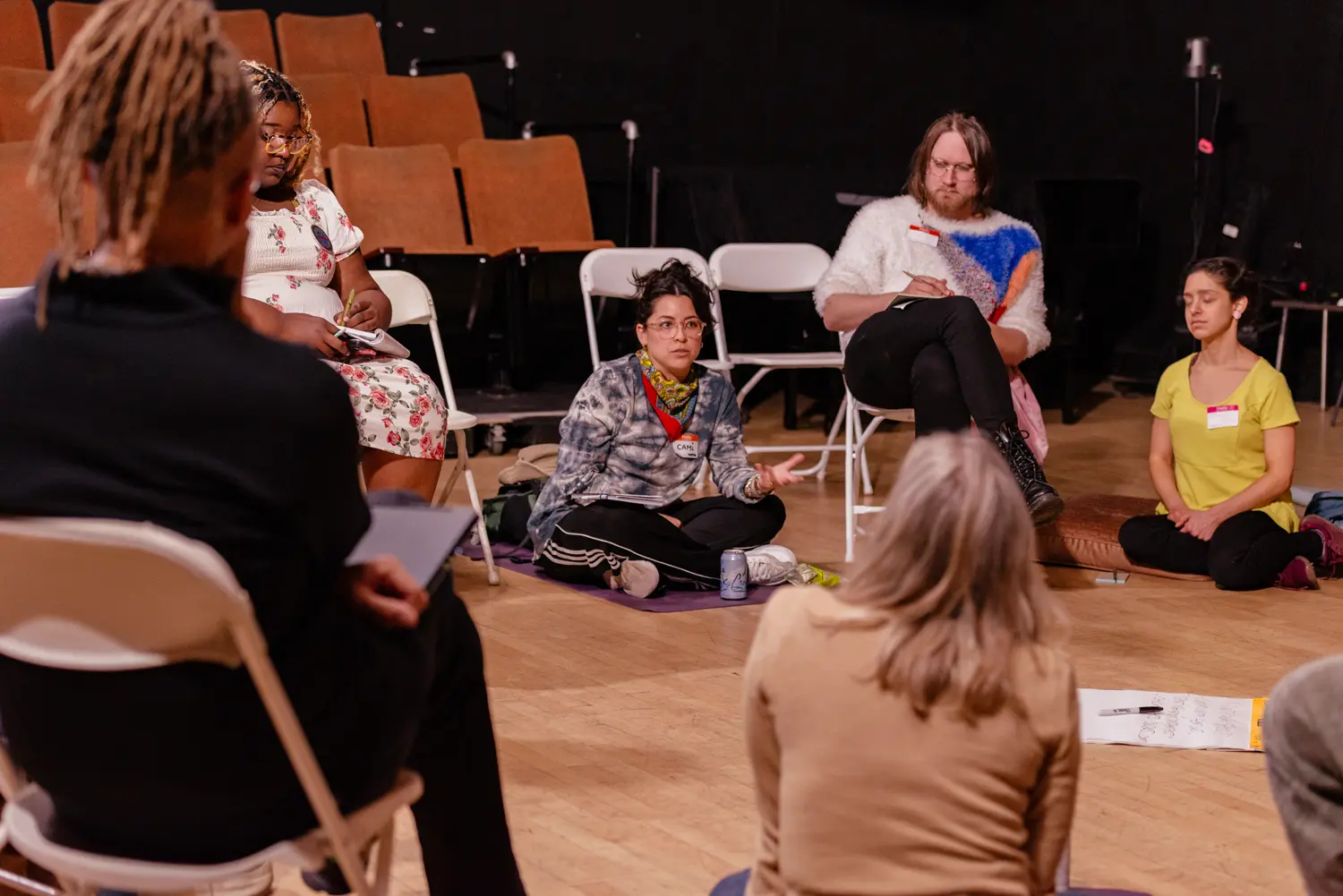
In late April performance artists gathered from across Chicago, united by concerns over broad defunding in the arts. This event came in response to a recent survey put out by High Concept Labs (HCL) and Chicago DanceMakers Forum, in which a total of 93 respondents reported varying degrees of concern regarding “the current moment and/or future of Chicago’s performance ecosystem,” with not a single person rating their concern as “none at all.”
As a Chicago-based artist and former HCL intern, I was excited for what an event like this might offer. So, on a hot Saturday afternoon I entered a multipurpose event space for the Chicago Performance Community Convening. In the main room, couches, yoga mats and chairs were arranged to face the back wall on which a zoom screen was cast for virtual attendees, along with open captioning for folks with audio-related access needs. I immediately felt at ease—I had been needing a space like this. One where young and old, POCs and otherwise, queer and neurodivergent folks were all united by a shared grief and a shared hope.
Facilitator Nora Sharp began by saying that “part of what brings people here today is a context of a lot of loss, and a lot of change.” They went on to offer words of encouragement that “artists are going to keep on keeping on,” alongside an acknowledgment of the un-romantic reality of being an artist in today’s climate. The crowd was divided into three groups and three rooms. Rotating facilitators conducted open discussions around issues of “space and infrastructure,” “equity and access” and “finances and sustainability.”
Sitting in a large circle of 20-some people, I found myself surrounded by puppeteers, artistic directors, dancers, experimental music makers, etc. Opening a discussion around the issue of space and infrastructure, there was a shared implicit understanding of the dire need for spaces in which to practice, create and perform. One person said, “a lot of folks are looking to community-based models,” going on to explain how within their own organization they were seeking to “reframe paradigms of individual ownership.” Others expressed frustration and grief around creative hubs within the community that had been forced to close under financial strain.
The next conversation around equity and access was facilitated by Alysha Monique. She opened with a simple question: Who is this work for? One person commented on the difficulty of bringing together people who feel they’re not smart enough and people who feel they’re too smart. Another noted the issue of those institutions that tend to use “equity as morality status.” The conversation culminated in folks expressing a need for a collective resource database.
In our third discussion surrounding finances and sustainability, facilitator Sam Thousand was met by a heavy silence. After a few moments, someone said, “I find it a totally terrifying environment… I don’t see the peak at this moment, I feel like we’re still headed in a dangerous direction.” Another person responded to this, saying, “things are so volatile that I have learned to just diversify… it’s a practice of letting go.” The energy in the room began to shift as folks shared ideas for building mutual aid systems in the absence of government funding. As if naming what we had all been tiptoeing around, someone said, “are we strong enough in the art world to actually demand a revolution?”... What might it look like for us to demand “having our basic needs met— instead of funding wars?” The conversation shifted to one about the politics of access and the significance of social capital.
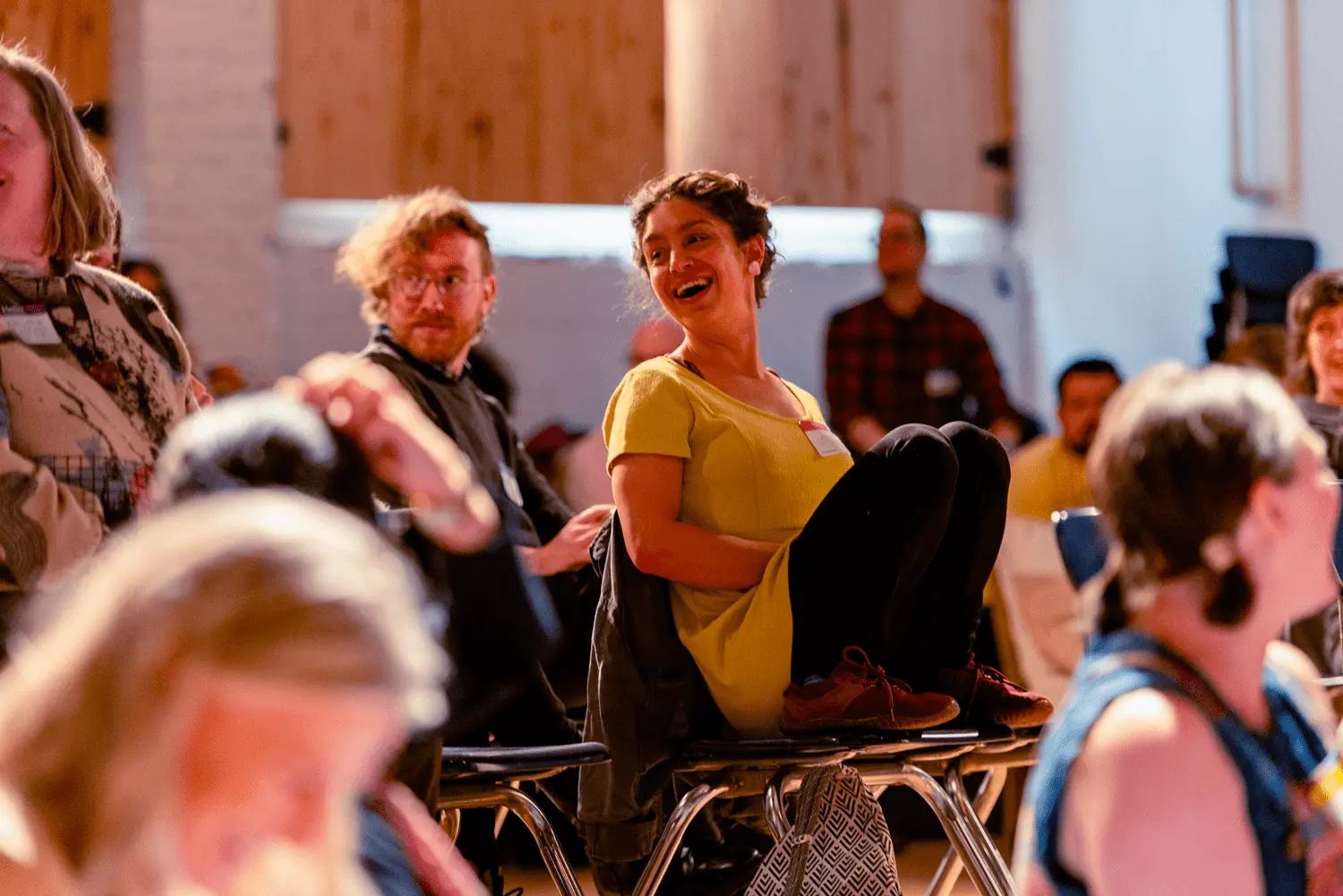
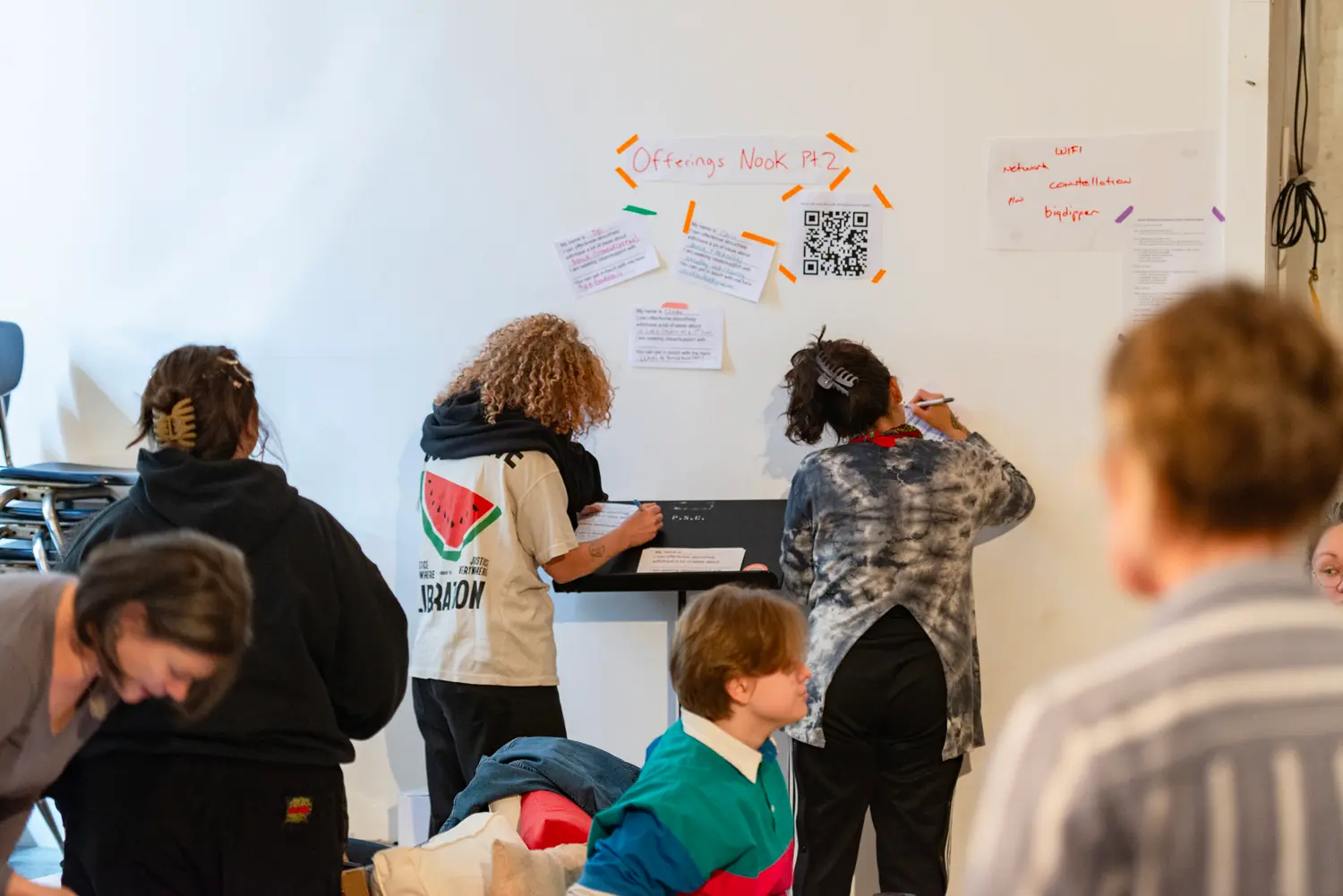
The event concluded with all groups returning to the main space for a final discussion and review. Folks took turns sharing ideas that had arisen, opening opportunities for interested parties to get involved. HCL and DanceMakers Forum will be following up with a report summarizing ideas explored and potential next steps. It is clear to me that this event was not meant to be an answer, but a starting place. As one participant said, “what are we waiting for? We have something to say about this mess.”