D.C. National Gallery of Art Acquires 7 Salvadoran Works in Representation Win
The National Gallery of Art in Washington D.C. recently acquired seven seminal works by Salvadoran artists Beatriz Cortez, Walterio Iraheta, Simon Vega and Veronica Vides. These works will join a world renowned public collection that includes work by Salvadoran artists Guadalupe Maravilla and Muriel Hasbun. The acquisition marks an important moment in Central American representation in the U.S., and a continuation of the international movement toward increased art world representation from the region.
This shift is in part due to the work of the Y.ES Contemporary Loan Program which has facilitated the circulation of Salvadoran and Central American works on a global scale. Beyond the work of Y.ES Contemporary, a release states that “In recent years, museums such as the Reina Sofía in Madrid, Tate Modern in London, the Museum of Modern Art (MoMA), and the Parrish Art Museum in New York have incorporated a growing number of works by Central American artists into their collections.”
The artists whose work will now join the National Gallery’s collection are continuing to build that legacy, and their breathtaking works will surely do the region justice.
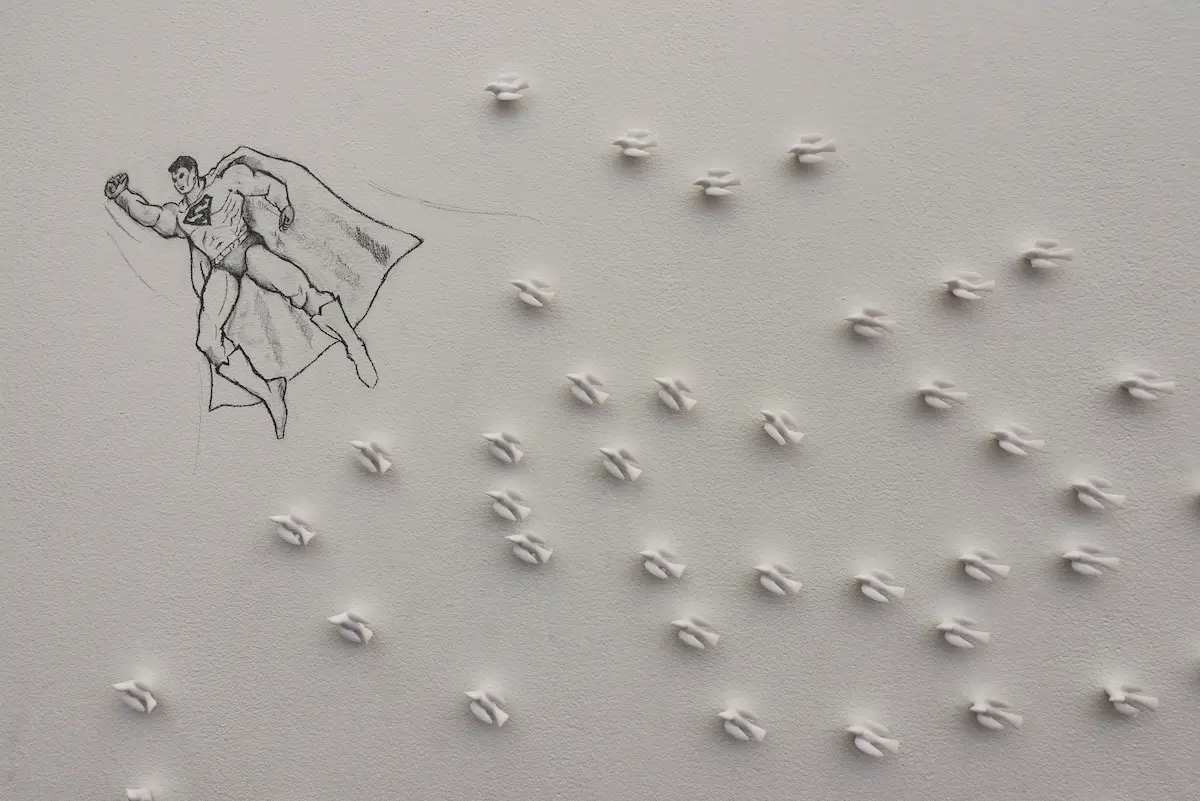
Artist Iraheta describes his practice: “Social issues provide the common thread running through all my works.” Working in a range of media, he is fascinated by objects and the stories they tell about society. In his featured piece Lección de Vuelo #6 (2006) he relates the migratory pattern of the iconic hero Superman to the movement of Salvadorans during the Salvadoran Civil War (1980-1992).
Vides’ work in photography, performance, sculpture, drawing and installation explores the relationship between humans and nature. Her selected works A Peso (2003) and Five Pesos (2003) draw attention to the brutality of capitalism through the delicate embroidery of El Salvador’s former currency. She remarks, “With this piece, I speak with irony and humor about the social injustice in my country and the environmental destruction perpetuated by those in power, regardless of their political affiliation.”
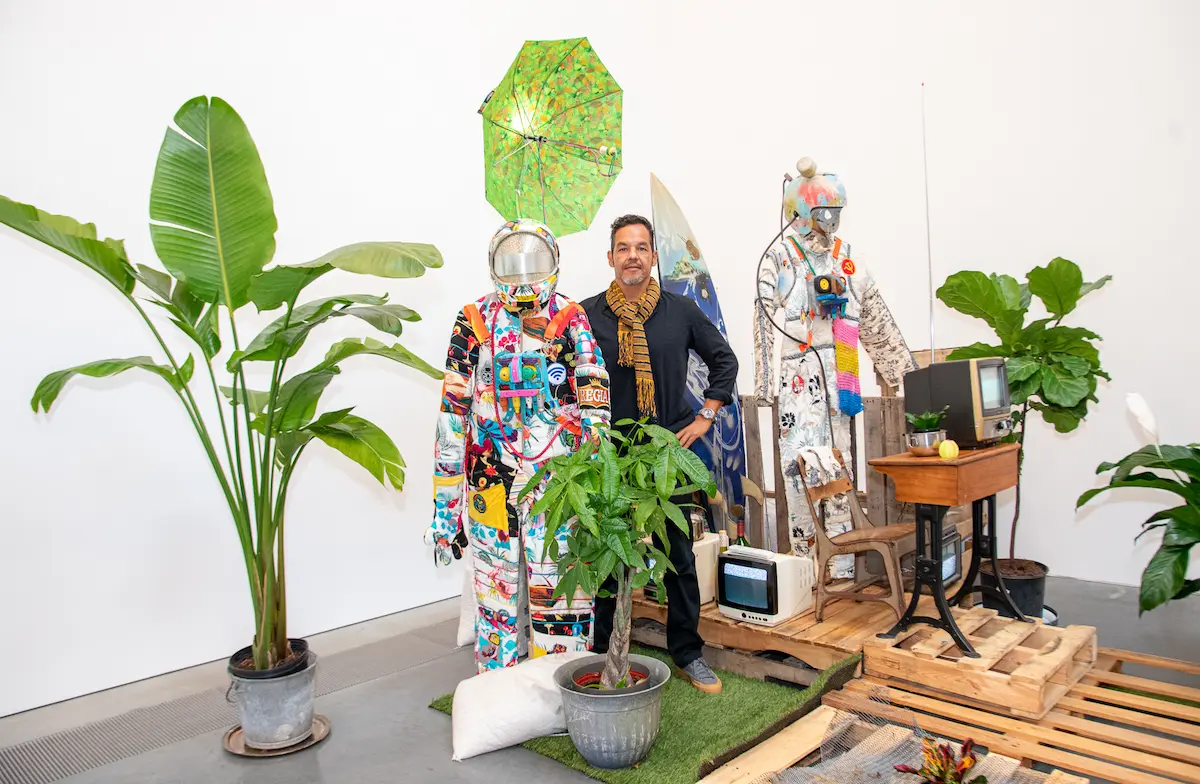
Vega is known for his use of found and unconventional materials in the formation of ephemeral and futuristic sculptures that explore technology and science fiction, as well as the socio-political and cultural landscape of modern Central America. Three of his “spacesuits,” made from recycled materials, will feature in the National Gallery’s collection.
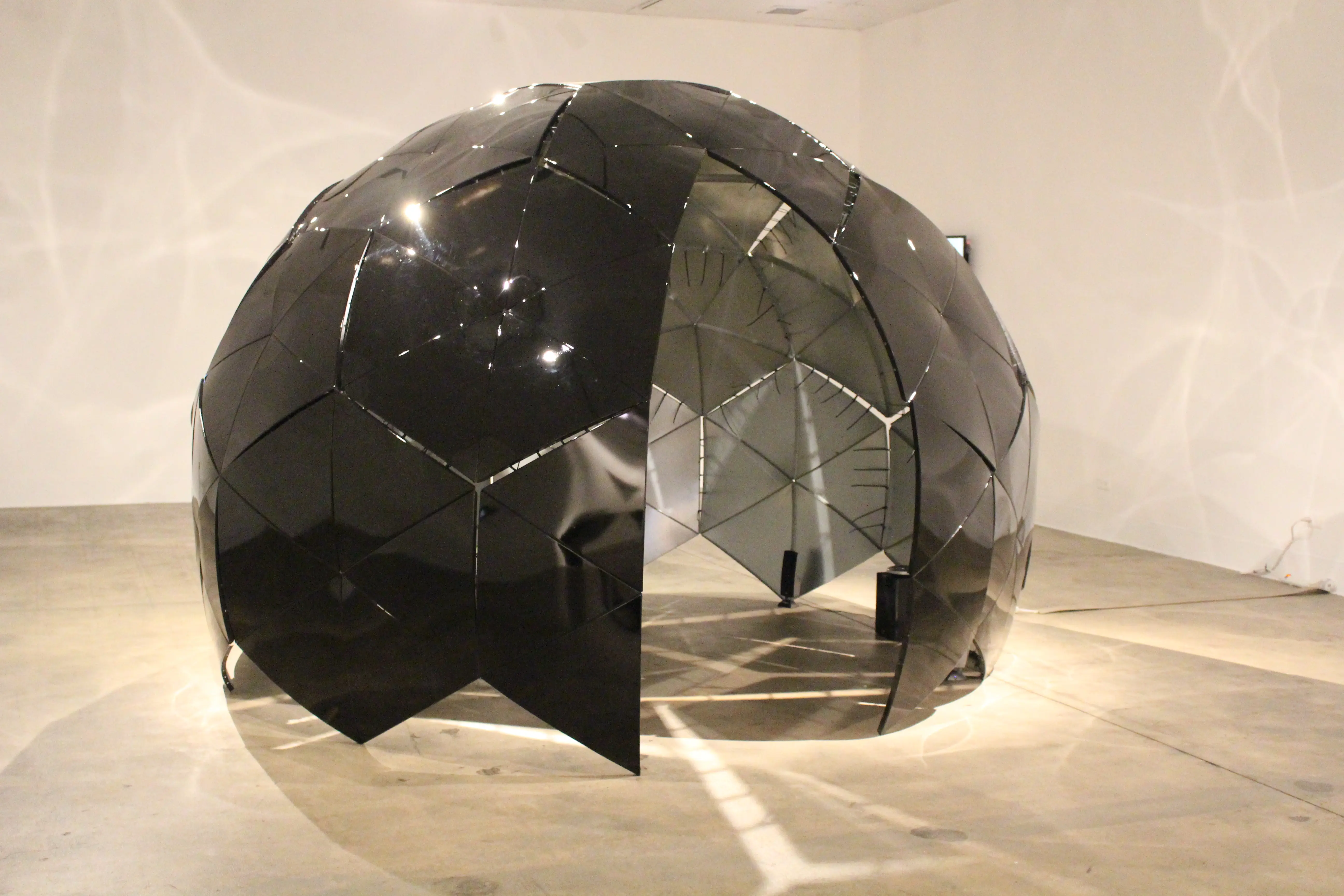
Cortez is also interested in the future as a point of inspiration for her work. Her practice is deeply multidisciplinary, primarily incorporating sculpture and multimedia installation. Black Mirror (2016) draws on Mesoamerican cultural tradition, inviting the viewer to “imagine other possible worlds, other possible destinies.”