How NY Photographer Taurat Hossain Moves Between High Fashion & Raw, Street Photography
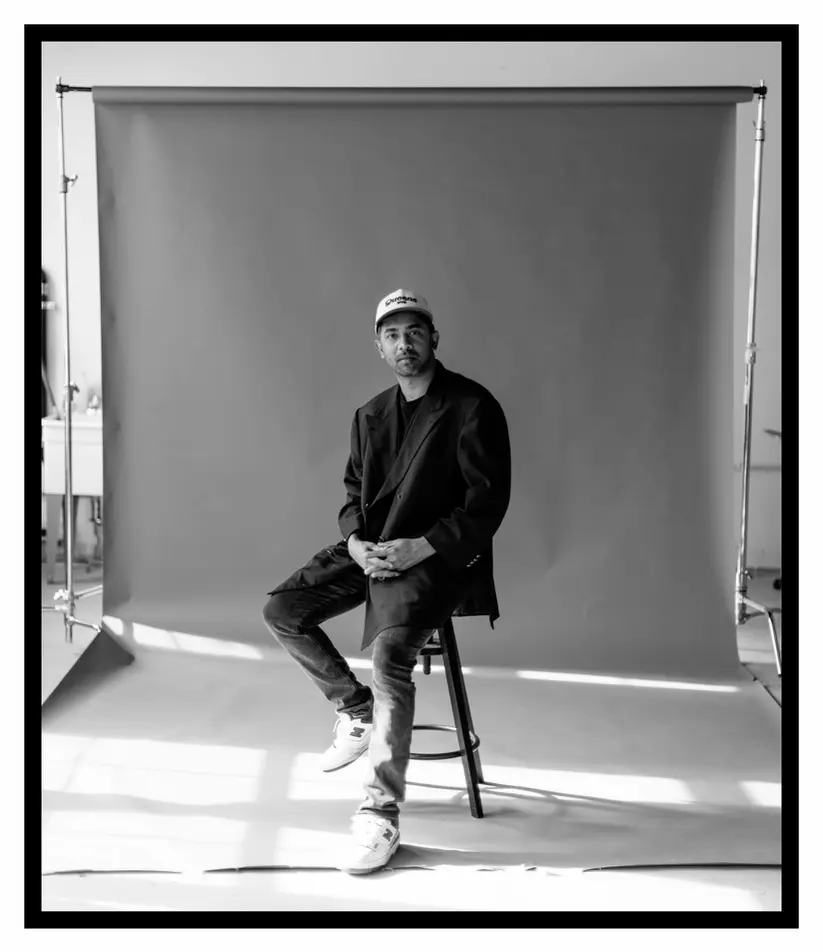
I often think to myself that a good photographer has an eye for composition and for “capturing a moment," but a great photographer, however, positions themselves to be in the right place at the right time even when it doesn’t feel planned. It’s intuitive. Unscheduled and precisely on time.
This is what I see in the work of New York based–Bengali-American photographer Taurat Hossain: intuition guiding the eye through the lens.
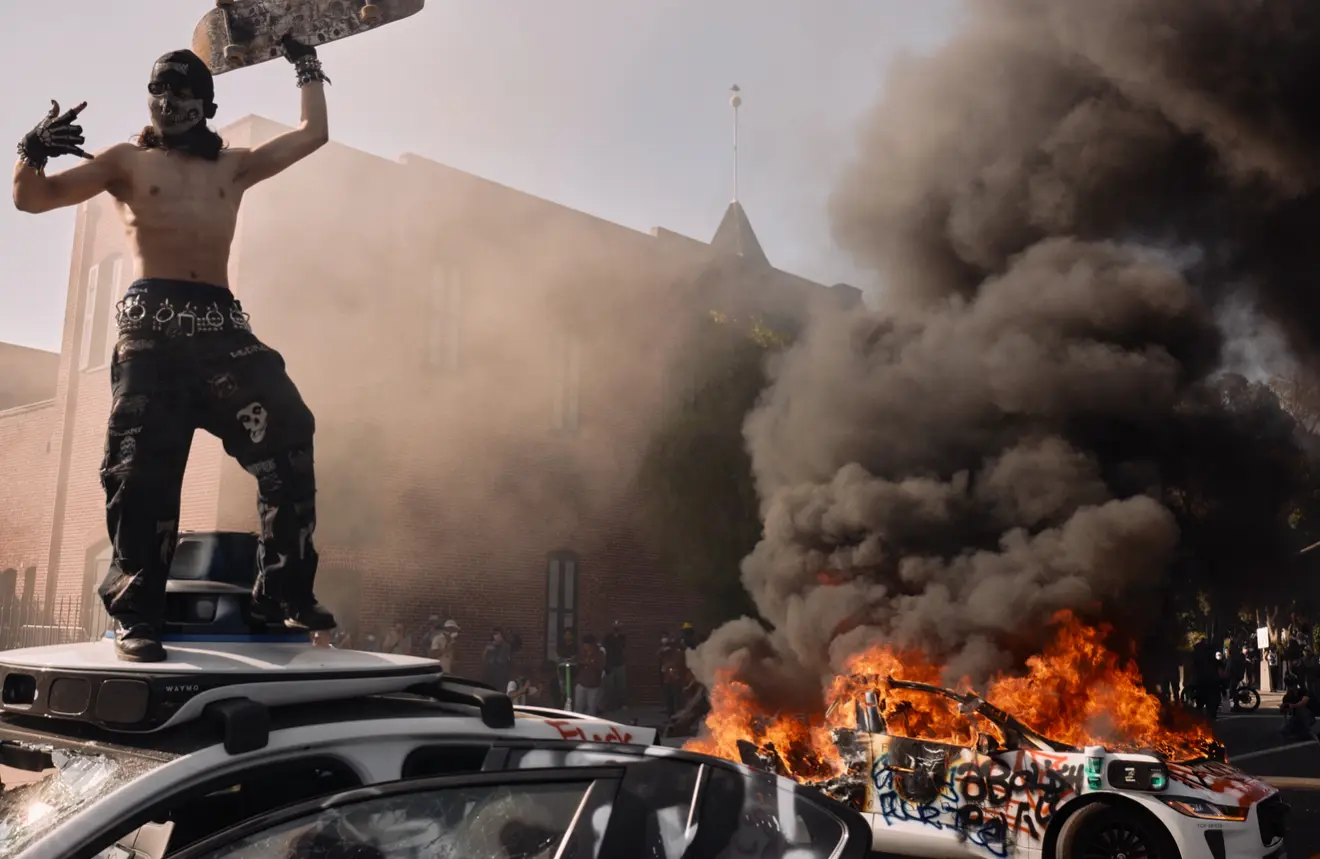
Taurat has an uncanny way of appearing at the center of unfolding history. At the height of the anti-ICE protests in Los Angeles, one of his images began circulating across my Instagram feed. A shirtless man stood atop what appeared to be a car, skateboard raised in the air, flames raging behind him. The photograph felt almost too immediate - too real and still does - in a way how the world felt right now: on fire.
Scrolling through Taurat’s own feeds reveals a breadth of photographs well beyond the urgency of protest. His feed moves from cover shoots with American singer Meg Donnelly and Natalie Jane for Groovevolt Magazine to documenting civic moments, such as the recent Zamdami mayoral inauguration celebration and anti-ICE protests between New York and LA. Such narratives are what draw me closer to Taurat’s work and make me wonder, what’s next?
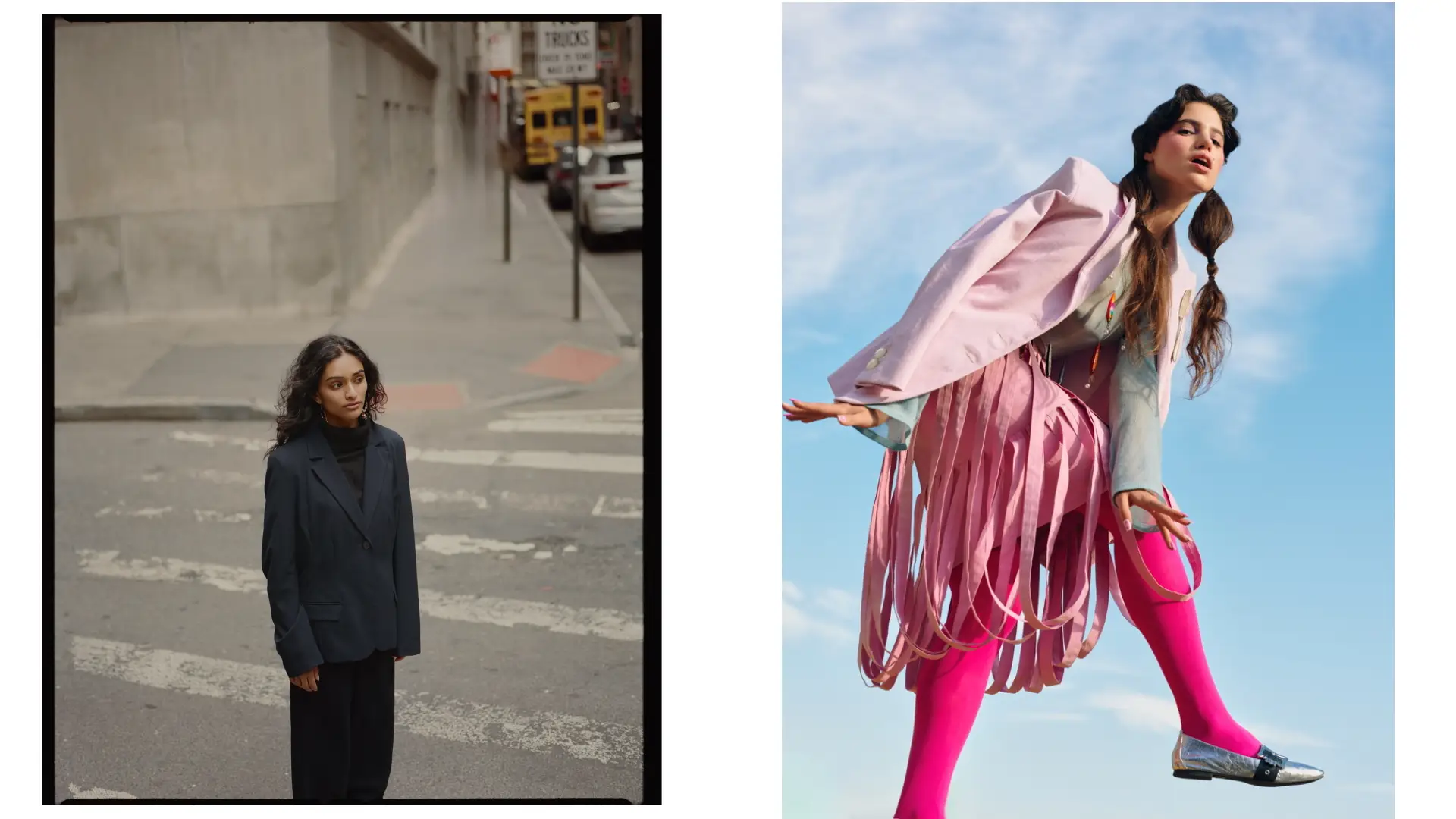
Your photography moves between fashion, journalism, and cultural documentation and as a New Yorker, I know you had many influences - growing up in a melting pot of a city - what personal experiences or early influences shaped the way you approach photography as both an aesthetic and a socially conscious practice?
Growing up in New York gave me visual literacy before anything else. Equally, I spent my formidable young adult years in Los Angeles which shaped my perspective in another way entirely.
Having been tried and tested on both coasts, being surrounded by so many cultures, styles, and ways of moving through the world taught me how to observe nuance early on — keep in mind, my foundation is very much fashion and editorial, where aesthetics and narrative matter deeply.
When I engage with social or cultural moments, I approach them with that same visual discipline - thinking about mood, composition, and emotional clarity rather than documentation for its own sake. My social consciousness comes from proximity and lived experience, not from trying to position myself as a journalist.
To me, fashion is essential to culture, body language, and environment as they all communicate something before a word is spoken.
You’ve photographed subjects tied to politically and emotionally charged issues - immigration (recently as seen in your photos captured at the anti-ICE protests in LA), free speech, LGBTQ+ rights, and reproductive justice. How do you protect your own mental health while engaging so deeply with stories that carry real emotional weight?
I am very selective about when I engage with socially charged moments. I don’t feel the need to document everything. I show up when something resonates personally or culturally in a way I understand visually. And immigration, free speech and LGBTQ+ rights for example, I understand.
I am a product of immigrants.
I have immediate family members who are DACA recipients.
I have friends who are on O1 visas constantly stressing about their status or quieting themselves to avoid being deported.
In America.
In 2026!
I went to a theatre school surrounded by friends who, at that time, had struggled with their sexual identity and I saw the challenges of those experiences for them. So If anyone ever combs through my X feed, they’d see the consistency in my political beliefs going back a decade.
Equally, even though I am very intentional about when and how I engage with emotionally charged stories, I do recognize that more often than not, you do have to absorb those moments.
And that is the price of admission for calling yourself an artist.
Which is different from being an artist.
You can’t shy away from the ugly.
Especially if you have an artistic voice.
There’s a responsibility that comes with that as much as there’s a privilege being one.
Protecting my mental health means honoring that selectivity and reminding myself, that yes, this is a heavy fucking moment, and I am going to have to suck it up and make it work.
And to be frank, activism is as human as style and fashion is.
Photography is my activism.
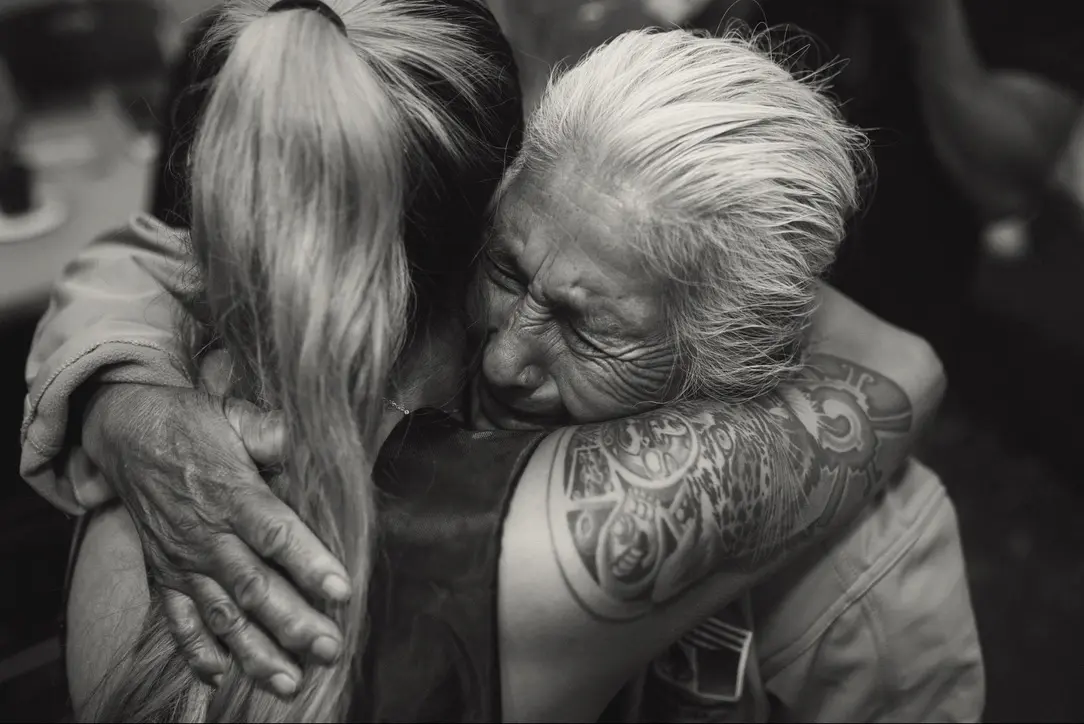
How do you navigate the tension between beauty and truth, and how does that balance reflect your own inner world as an artist? Street photography can feel so raw and extreme in moments, while editorial is more still, and in studio (more controlled) - how do you balance the two?
I don’t see beauty and truth as opposing forces like good vs. evil.
Beauty is often the starting point—it invites people to stay with an image, a moment, a face at a bar, long enough to feel something deeper.
Whether I’m working in the street or in a studio, I’m always searching for both beauty & truth: light, gesture, stillness, tension, a smile, a breeze in the hair.
I do recognize how cheesy and fake that sounds and I do hate myself for saying it but it is quite literally my truth.
Street photography sharpens my instincts; it’s fast, emotional, unpredictable.
Editorial and studio work are quieter, more intentional, surgical and controlled.
They balance each other, and together they reflect how I move through the world—between chaos and control, intuition and restraint.
But emotionally, they’re connected.
In all of it, I’m looking for presence—something human that feels honest.
That balance mirrors my inner world too: moving between chaos and stillness, intuition and control.
If I had to choose between chaos and control— more often than not, on most days, I would always lean more towards chaos.
You’ve spoken through your work rather than overt advocacy. In what ways can photography quietly support mental health awareness?
As photographers, we can support mental health by allowing people to feel seen without explanation—by offering moments of stillness, dignity, or softness in a world that’s often loud and overwhelming.
And a lot of the loud out there is often from really stupid people.
or worse: cowards who try to scare you away from their own failures and pursuits.
I also really believe in moments of stress, crisis and other situations beyond our control that feel overwhelming, consuming art is profoundly important.
Even to those who say that they don’t get it.
Go to the Met and let a Rothko consume you.
or bask in the glory that is Motherwell.
or study a series of Lindbergh photos.
And as someone who has struggled with his own mental health, I encourage artists to document themselves and force themselves to create something for themselves.
It is deeply cathartic.
Photograph yourself immaculately styled, nude, angry, sad, smoking, eating, etc.
And eye opening.
And humbling.
And honest.
and most importantly, it softens the mental strain you put on yourself.
Even if it’s for a moment, it’s worth it.
How have moments of uncertainty or personal challenge influenced your creative evolution and your sensitivity to others’ stories?
Periods of uncertainty have made me slower and more attentive. I listen more—to people, to silence, to my environment and also, to reflect inwardly.
I try my best to carry a difficult conversation with myself and play out multiple scenarios so I can be mindful of the other person’s feelings.
Equally, I try my best to be aware how my ideas, which are abundant and often way in the clouds and need to become grounded, can impact others needs and wishes. That sensitivity has shaped my creative evolution across all genres, especially in fashion and portraiture. I’m less drawn to spectacle and more interested in intimacy and true emotional honesty. Those moments of challenge ultimately clarified my voice rather than disrupting it.
What is next for you?
Well, I recently released part one of a three part fashion film, on both video and photo, titled, “Claire”. Its’ loosely based on a beautiful french film called Portrait of a Lady on Fire; when I first saw it, I immediately fell in love with it. I emailed the DP, Claire Mathon, and the Director, Céline Sciamma, and shared how moved I was by this movie. I’m not sure they ever saw my email but it didn't matter - it sparked an interest to do a modern, fashion, NYC take on this movie. So, more of similar stories, though finding the right model and talent of the team, is hard.
I did find my perfect model for this story - Claire Kremyar - she’s impressive and a true beauty.
I’d love to do some more work for fashion publications with a storytelling element, creative team and couture wardrobe.
I also have something really special releasing in April of this year for L’Oreal; can’t get into too much of it now but soon!