America’s Monuments Off Their Pedestals at MOCA Los Angeles and The Brick
"What am I going to do with this thing?"
According to curator Hamza Walker, these were Kara Walker's first words on encountering a 100-year-old statue of Confederate general Stonewall Jackson she had been gifted — via the vision of The Brick's Director — as she arrived at its temporary home in a New Jersey storage facility. Walker's response echoes the central conundrum of the two-site show MONUMENTS, showing currently across LA's MOCA and The Brick, re-envisioning how to deal with the imposing debris of America’s past.
What are we to do with these things?: the litany of monuments to the American Civil War and the "Lost Cause" heroes of the Confederacy, whose existence has been — for both sides of America's polarised parties — the center of posturing, protest and even bloodshed; most notably, during the "Unite the Right" rally of August 2017, when right-wing extremists gathered in Virginia in protest against the removal of a Confederate statue of commander Robert E. Lee, which resulted in the death of counter-demonstrator Heather Heyer.
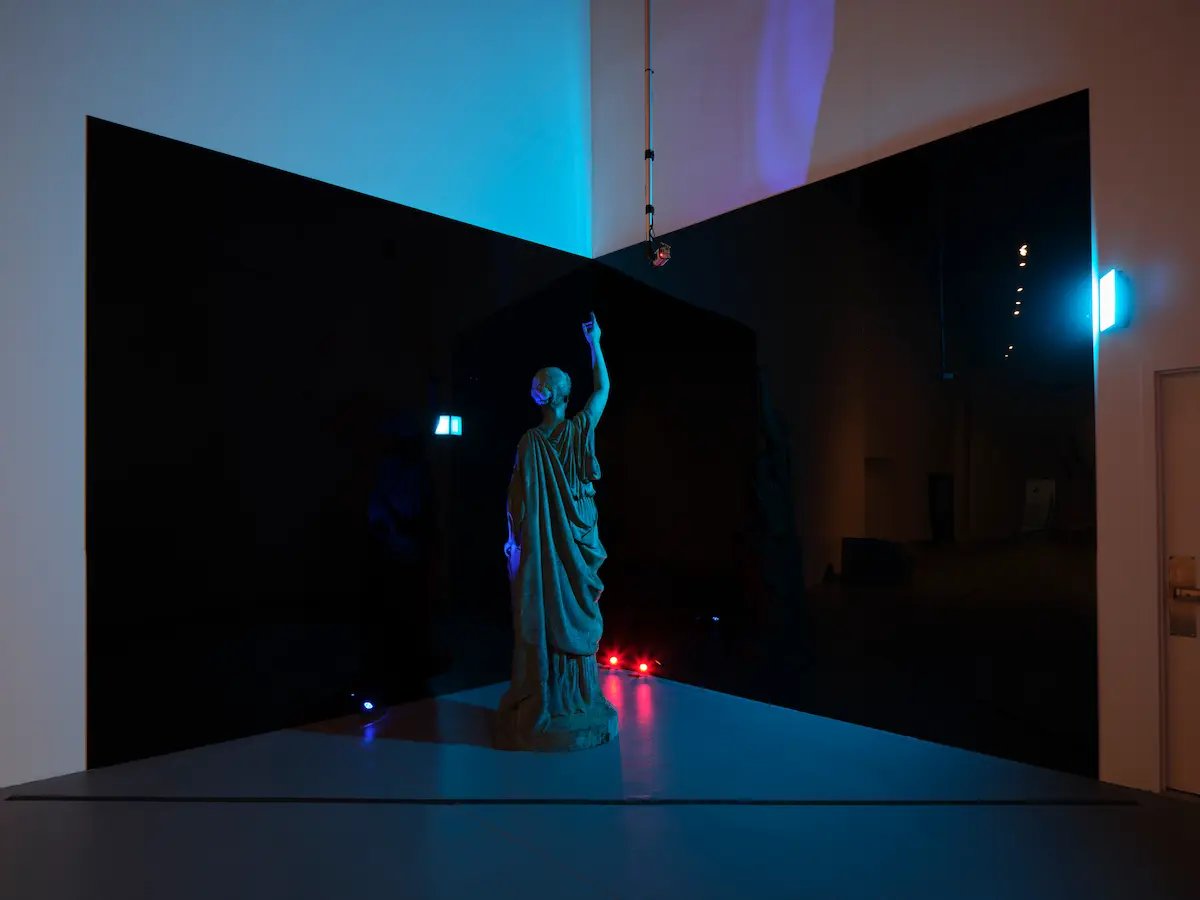
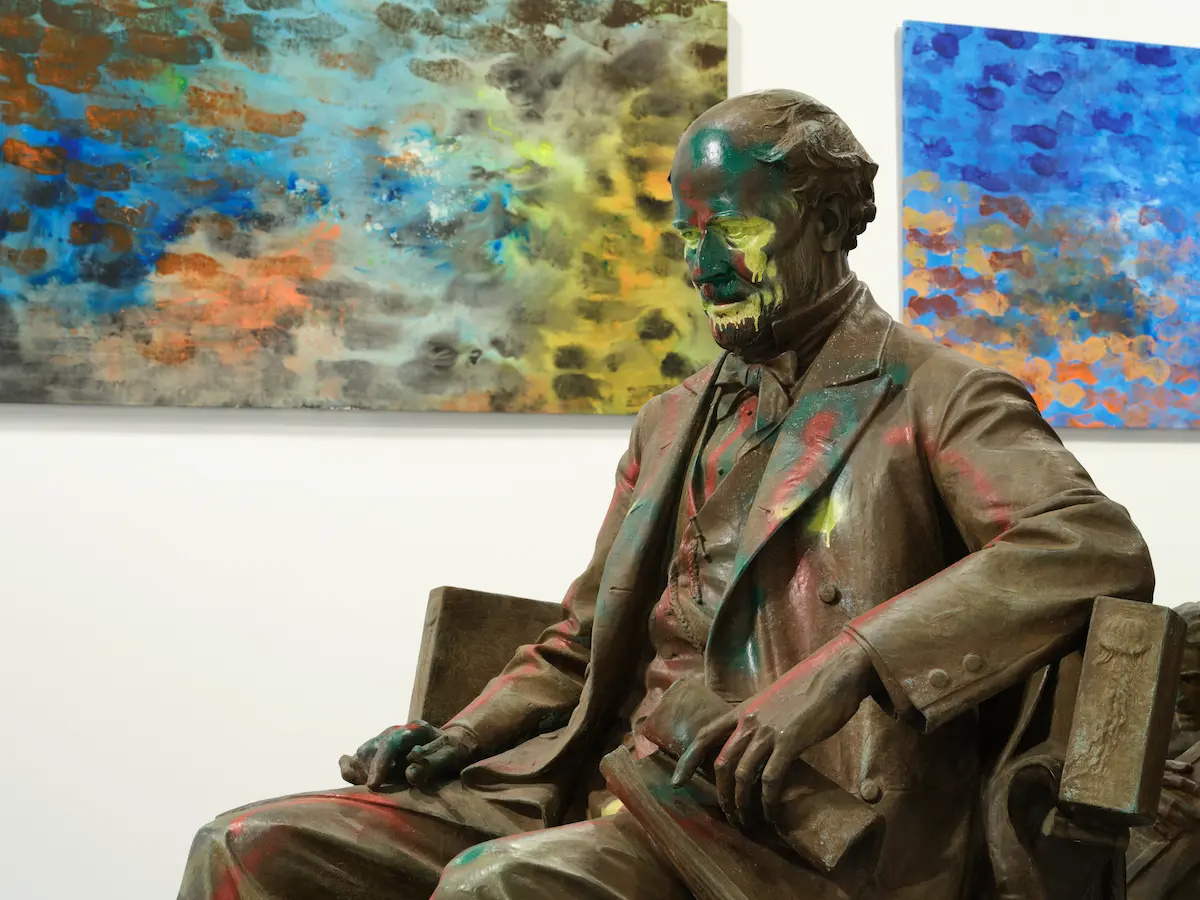
At MOCA, a collection of decommissioned monuments borrowed from across Maryland, Alabama, Virginia and North Carolina are presented in dialogue with contemporary (or newly recognized) works — including commissions for the show — by artists such as Karon Davis, Leonardo Drew, Martin Puryear, Andres Serrano, and Hank Willis Thomas. To confront the sheer scale of these statues, de-throned onto the stark floors of MOCA's Downtown space, is disquieting. Coming (somewhat) face to face with remnants of the country’s civic furniture is also humbling, though it's not entirely clear who more for: these subjects knocked off their pedestals - or us for building them up in the first place?

The juxtaposition of the statues' sheer size against the sometimes foot-notian role of the people they depict is ironic. Reading the accompanying wall texts, describing both their subjects' historical deeds and the craft of their makers, easily calls to mind the folly at the center of Shelley's poem Ozymandias (1818) - itself quoted in documentation accompanying Walker's sculpture at The Brick. These monumentalized men and women are oxymoronic in their existence: present only as placeholders for where their subjects once stood. (The fact that the poem's own subject — a statue of Ramesses II — was once dubbed "the Donald Trump of ancient Egypt" only further reinforces the present prescience in revisiting the icons of our past.)
Alongside these bronze faces, contemporary works like the short film HOMEGOING — a collaboration between opera singer Davóne Tines and filmmaker Julie Dash, commemorating the tenth anniversary of the horrific shooting at Mother Emanuel AME Church in Charleston, South Carolina — are both heartwrenching and helpful in providing explorations into what the monuments of our futures might be.Tines’ stirring soundtrack, offered as ‘a cinematic act of remembrance’ breaks past the walls of the room in which it screens, suffusing much of the exhibition space: a perhaps uninvited but much-needed guest, offering a sense of healing and transcendence. Existing as it does among works that aspire to austere longevity, the oral beauty and malleability of this contemporary work evokes a depth of historical sentiment unmatched by its stern neighbors.
An American Reflection, by Monument Lab is a new commission for the show, and presents a single-channel digital work powered by a series of data cloud visualizations that map the country's sculptural landscape. It is an extension of their National Monument Audit (2021), a response to the States’ ‘monumental reckoning and reimagining’, and offering a more practical way to explore and critique what statues mean today. Offering data-backed insight into US memorials — one key finding being that they disproportionately elevate the Lost Cause above Emancipation and Civil Rights more broadly — the collective’s work also expands beyond the gallery; offering an ongoing ‘Monument Lab Summit’ as part of their output, they affirm the strength of collaboration and collective action in ‘monumaking,’ above and beyond the fixity of it’s subject’s remains.
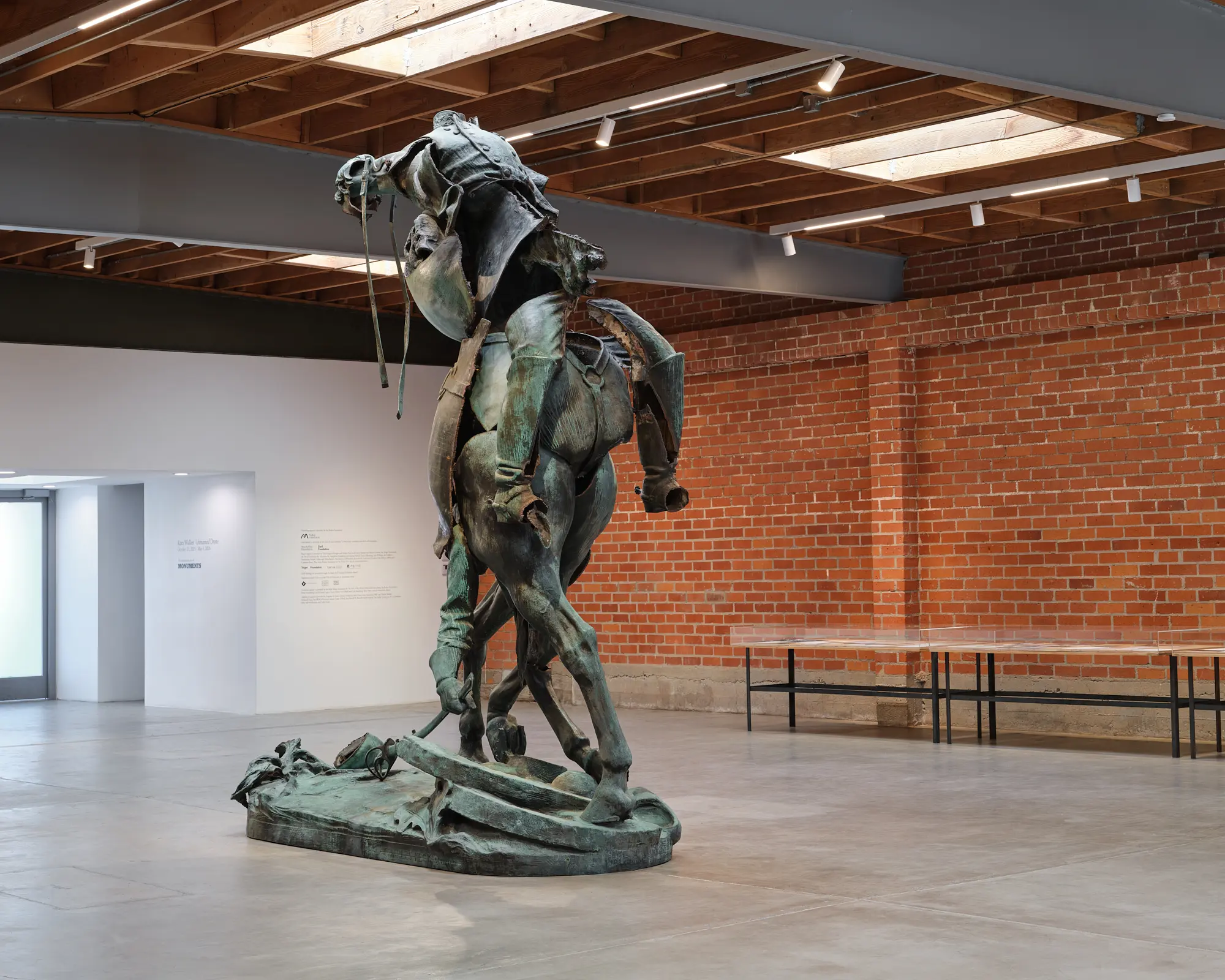
Over at The Brick, Kara Walker's contribution is seismic; her new work created from the remnants of the Stonewall Jackson statue —Unmanned Drone (2025) — confronts and disarms, literally. The man and his trusted horse Little Sorrel are imperceptible at first, save for his famed limb, the Achilles heel that itself became an iconic relic of the Lost Cause, lying impotent at the work's base. Walker dismembers horse and rider, reportedly referencing specific guidebooks on how best to butcher her subject, to create a Frankenstein’s monster of horror icons — part zombie, part android — with no discernible humanity or sense of self; in being unmanned, unnamed and yet eerily recognizable, Walker's immense mastery gives visual reckoning to something so hard to verbalize.
MONUMENTS is a show which stays with you, and a few weekends following, I reflected on it again when listening to a conversation between the filmmaker Ava DuVernay and The Whitney’s Adrienne Edwards in Washington DC — itself a cradle of so much of America’s monumental artworks. Speaking on recent turmoils and fractions in the US landscape, she posited that there was a straight line “between the Civil War and what we are experiencing today." If she’s right — and I find it hard to argue she isn't — then MONUMENTS provides a framework to not only join some of those dots, but to bring them into much crisper relief. These monuments — travellers from distant lands and times — have long spoken at us. Here, in the hands of these remarkable artists, they appear to ask us what we might finally be ready to hear.