Art Militant: Axel Arigato Hosts a Community Drawing Course for New York Creatives
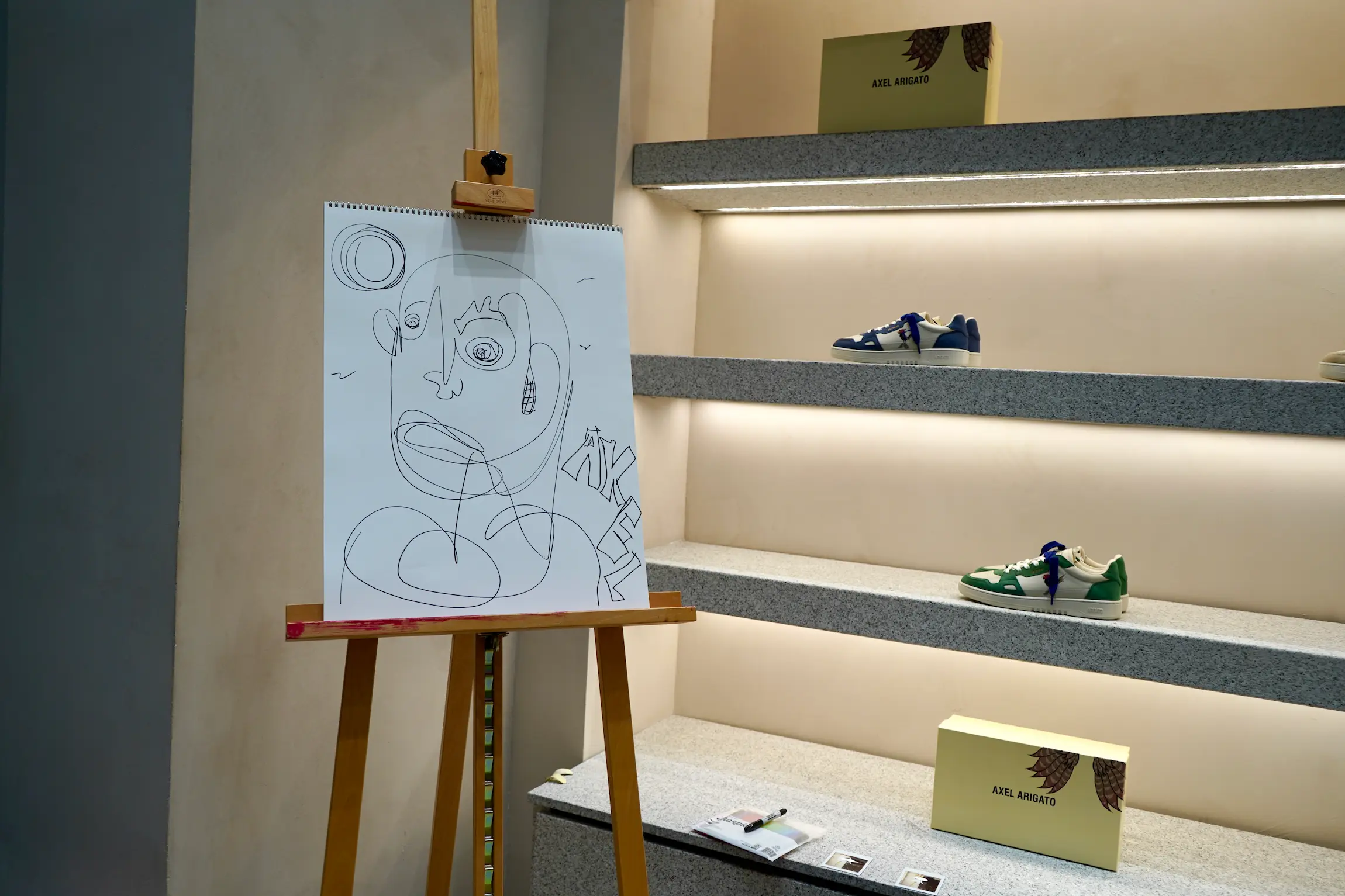
Recently, Axel Arigato held a drawing course for New York City’s artist community in its SOHO flagship store led by artist Cavier Coleman. This event marked the brand’s 16th community project in the rollout of its new streetwear fashion collection, “AKAIA”. The production was an intentional nod to the collection’s designer, Chicago based illustrator Reggie Know's interpretation of streetwear culture and the energy he trailblazed with anime inspired advertising styles in the 90s, which would directly influence pioneers like Kanye West, Virgil Abloh and Chris Gibbs.
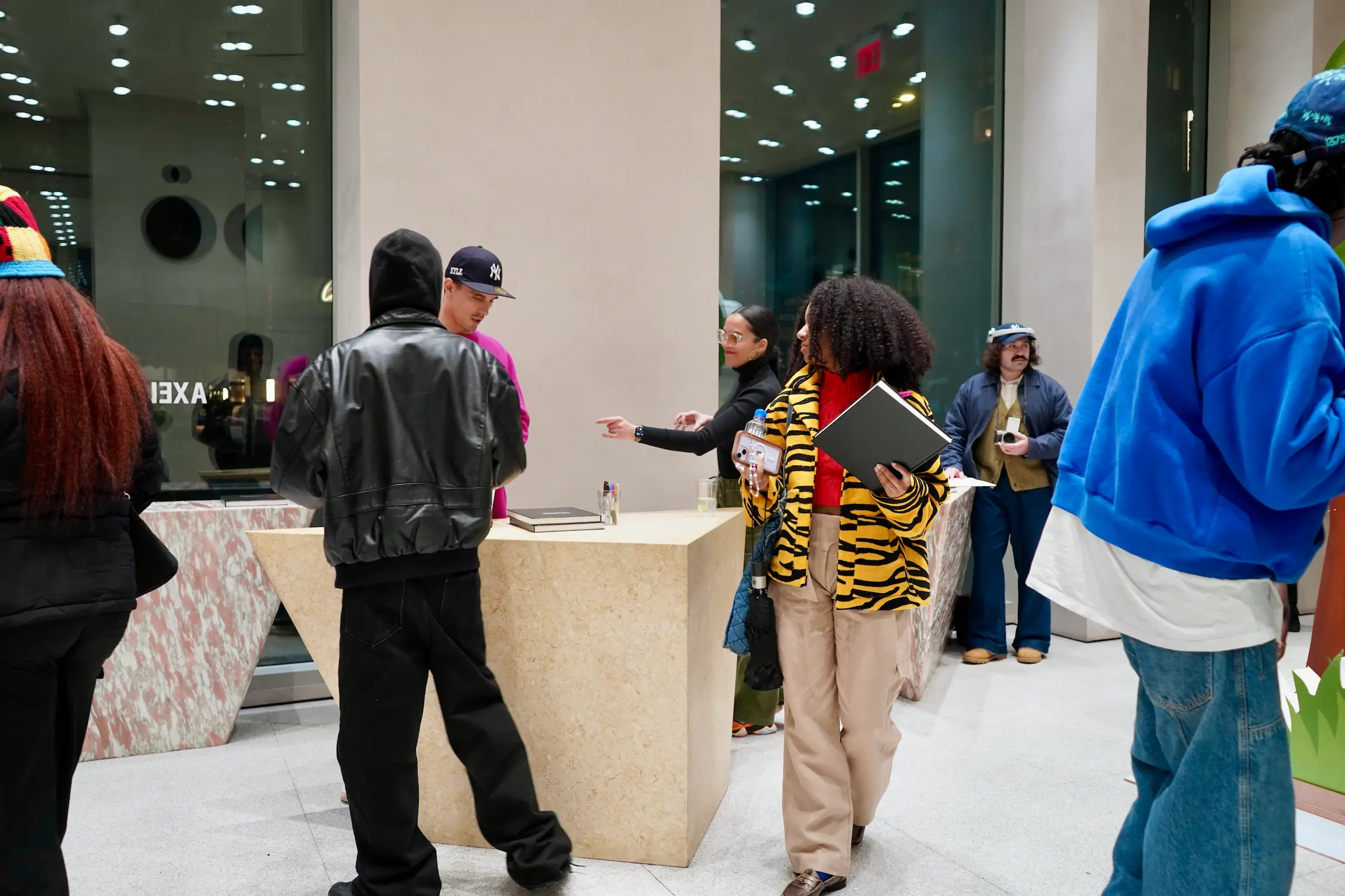
As participants traced lines over prefabricated sketchbooks inspired by the new collection, the room sparked with conversation. In one corner, a duo of designers leaned over to share a technique with a stylist; just feet away, a sous chef’s sketchbook passed from hand to hand for signatures and tags. Every mark became part of a collective rhythm, filling the space with electric energy. This is my kind of jam.
After seven months away, returning to New York City felt necessary. It was a reset in pace, and a return to proximity to friends whose practices shape my work, and many whose work shapes our day and age culture. Last week, we brought these familiar faces together for a community drawing course hosted by Axel Arigato, uniting artists, designers, stylists, and media creatives from across the city in a live space of exchange and production.
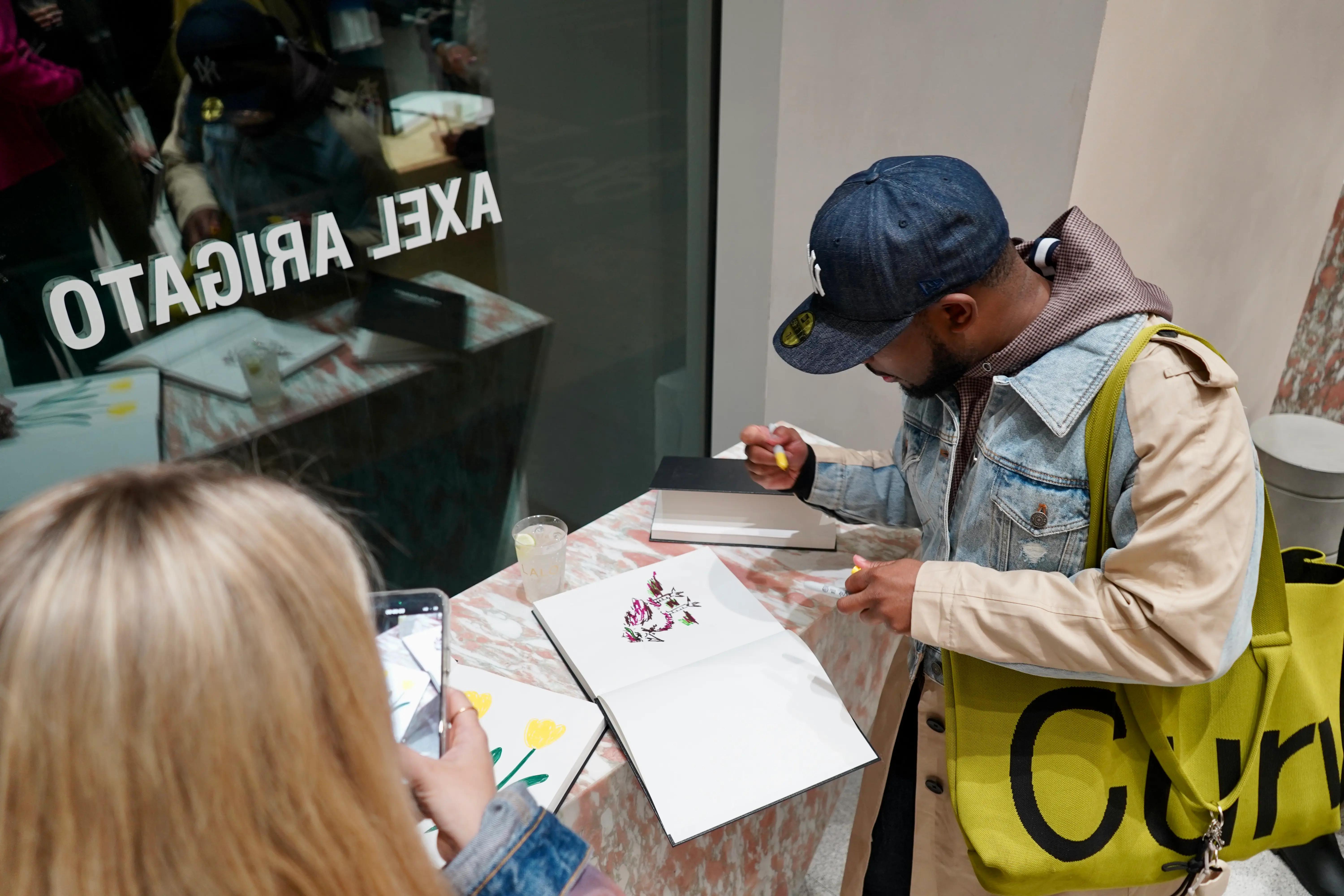
The AKAIA Studio Drawing Workshop opened the brand, archive, and institution as permeable matter, active and circulating. Participants drew directly onto surfaces of authority, collapsing distance and redistributing style in the lineage of Marc Jacobs and Virgil Abloh. What emerged was shared authorship, an imprint that accumulates, circulates, and travels beyond the moment allowing independence to outshine order.
By placing the workshop inside a luxury flagship and treating the floor as a site of live production, fashion became a working surface. The store transformed into a gathering ground where creative labor circulated through exchange and fellowship. By night’s end, sketches and marks had formed a patchwork of origination and expression. Notes, images, and gestures jumped onto social feeds, conversations spilled into the street, and the store’s energy extended into the city as an unmistakable ripple of collaboration.
Creative Director and visual artist, Keith Selby, who played a few pivotal roles in multiple areas of making this night come together offered insight into the thinking behind third space production: “I exist in this specialty area between the brands and the people. The space creates itself once the foundation is clear. As long as there is a common interest, which is culture, you must then build a space where you can protect whatever that is and be in service to get a design, or a product, into the community in a healthier way than hard selling.”
These moments signal a broader shift: any space can be a platform for cultural commons. Third spaces hold production as well as presence. Energy moves from room to street, traveling, scaling, and appearing in new contexts. Community forms through this movement, continuously extending beyond the site of origin.
If brands want to matter beyond logos, they must stop standing apart and start standing with the makers of our world, engaging the scribes, visionaries, and collaborators who turn space into conversation, and setting commerce aside when facing the communities they serve.